As we look toward 2026, public real estate firms, including those structured as REITs or property-holding companies, face a rapidly evolving landscape in which yesterday’s business models no longer suffice. To thrive in this environment, firms must sharpen their strategic focus on four critical areas: capital strategy, asset class agility, operational transparency and regulatory intelligence, and technology-enabled decision-making. Firms that move proactively will be better positioned to withstand headwinds and capture opportunities. In each of these areas, the platform offered by Avantis offers meaningful value, particularly on the regulatory, disclosure, and intelligence front.
Public real estate firms are navigating an era of elevated interest rates, tighter lending conditions and increasing debt maturities. According to a recent outlook from Deloitte, while fundamentals are expected to improve through 2026, caution remains with many firms anticipating higher expenses and flat or conservative spending growth. [Deloitte] With large sums of debt coming due and refinancing risks ahead, firms must ensure that their capital allocation is precise, disciplined and forward-looking.
For public companies this means:
Here Avantis can assist by giving access to real-time regulatory and filings intelligence (covering both U.S. SEC and Canadian SEDAR+ systems) so a firm’s finance & IR teams can stay on top of how peers are articulating capital risk, how markets are reacting, and how regulators are getting more rigorous.
The real estate sector is undergoing structural change. In many markets, the traditional office sector remains under pressure, while growth is being seen in newer themes such as purpose-built rental housing, data centres, logistics, senior living and alternative usage. For example, in Canada, the 2026 outlook from PwC and Urban Land Institute cites purpose-built rental and seniors’ housing as areas of growth. [PwC]
For public real estate firms this means:
Here again, intelligence is critical. A firm that can quickly identify peer disclosures about asset disposals, filings detailing new land acquisitions or emerging regulatory signals can move earlier and with more conviction. Avantis’s ability to comb through massive volumes of disclosures (SEC + SEDAR) and surface actionable insight helps in this regard.
Public real estate firms are increasingly judged not just on occupancy rates and rents, but on transparency of disclosures, ESG credentials, and responsiveness to regulatory change. For example, the ability to explain material risks, occupancy trends, sustainability investments and governance matters is a competitive differentiator.
What firms must do:
Avantis offers a platform that provides real-time monitoring, alerting, collaborative research, and AI-driven content analysis to accelerate and streamline disclosure workflows.
In 2026 and beyond, the firms that win will be those that leverage technology and data not just in operations (property management, tenant services) but in strategic intelligence—identifying emerging markets, understanding exposures and benchmarking performance. The Deloitte outlook references that AI and analytics are increasingly differentiators. [Deloitte}
For public real estate firms:
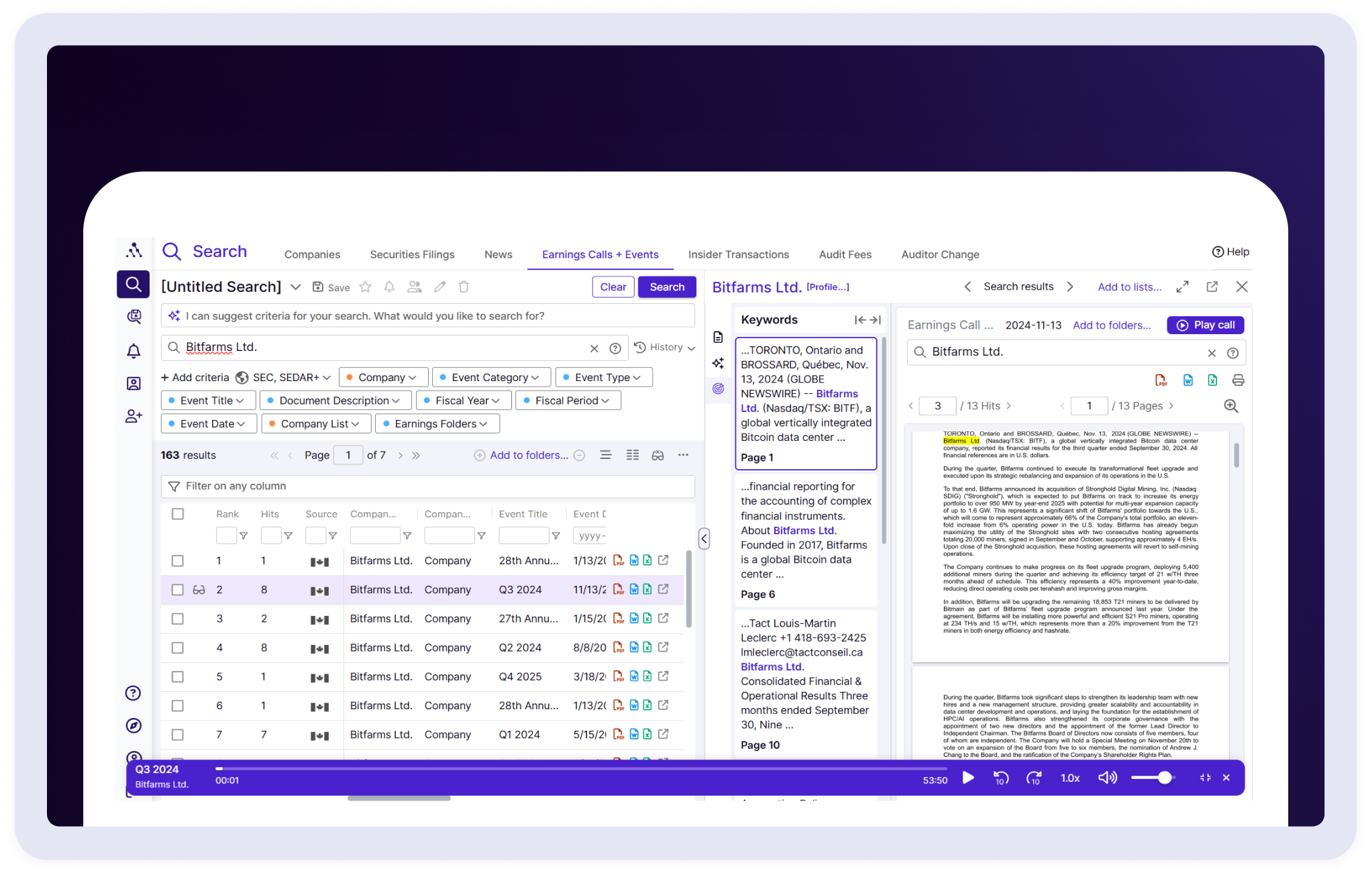
In that context, the Avantis platform offers an “AI-powered market intelligence” tool built for public companies. It brings together SEC + SEDAR filings, market data, insider trades, audit fees and more, with quick search, real-time alerts, collaboration features and exports. A public real estate firm can leverage this to rapidly scan competitor disclosures, monitor regulatory filings, benchmark audit costs, track insider transactions and evaluate their own disclosure preparedness.
In sum, public real estate firms entering 2026 must adopt a mindset that combines strategic agility, operational clarity and intelligence-driven execution. The capital markets won’t reward firms that rely on legacy playbooks or siloed processes. Instead, those that:
… will be the ones that lead rather than follow.
Tools like Avantis do not replace the deep operational insight or local market knowledge that real estate firms need, but they do significantly shorten the intelligence cycle. Public real estate firms can use the platform to reduce time spent on manual research, stay ahead of peer and regulatory moves, and build workflows that ensure faster and more consistent strategic decisions. In an era where being first matters, intelligence becomes a competitive edge. If you are part of a public real estate firm, whether in investor relations, asset management, finance or corporate strategy, you might consider how your intelligence workflows stack up.
Are you still manually reviewing disclosures and filings? Are you reacting to peer moves rather than anticipating them?
If the answer is yes, then 2026 may well be the year you upgrade your approach and partner with a platform like Avantis to get there.

Ready to optimize your market research process?
Contact Avantis today for a personalized overview and free trial.

 Get Started with Avantis for Free
88 Queens Quay West, Suite 2500, Toronto, ON, Canada M5J 0B8

(289) 803-8222
© 2026 Avantis AI Inc.