The countdown to IFRS 18 is well underway.
Effective for annual reporting periods beginning on or after January 1, 2027, IFRS 18 Presentation and Disclosure in Financial Statements will replace IAS 1 and introduce significant changes to how companies present and explain financial performance. For finance teams, however, IFRS 18 is about more than producing a different-looking income statement. The new requirements can affect the data behind financial reporting, consolidation and reporting systems, management performance measures, processes, controls and communication with stakeholders.
As 2026 serves as the baseline comparative period for 2027 reporting, organizations must track financial data under IFRS 18 rules in real time, making this year critical for operational readiness. Organizations that start early have an opportunity to move beyond compliance and build a more controlled, repeatable and efficient reporting process. Here are six areas companies should be focusing on and where Avantis can help turn IFRS 18 requirements into an operational reality.
The first step is understanding what IFRS 18 changes for your organization.
Among its key requirements, IFRS 18 introduces defined categories for income and expenses in the statement of profit or loss, including operating, investing and financing categories. It also requires defined subtotals, including operating profit and profit before financing and income taxes. Organizations should assess their existing financial statements, chart of accounts, reporting structures and accounting policies against the new requirements.
The assessment should also consider management-defined performance measures (MPMs). IFRS 18 introduces disclosure requirements for qualifying subtotals used in public communications to communicate management's view of financial performance. The objective isn't simply to create a list of technical accounting differences. A useful gap assessment should identify what each accounting change means for data, systems, processes and reporting.
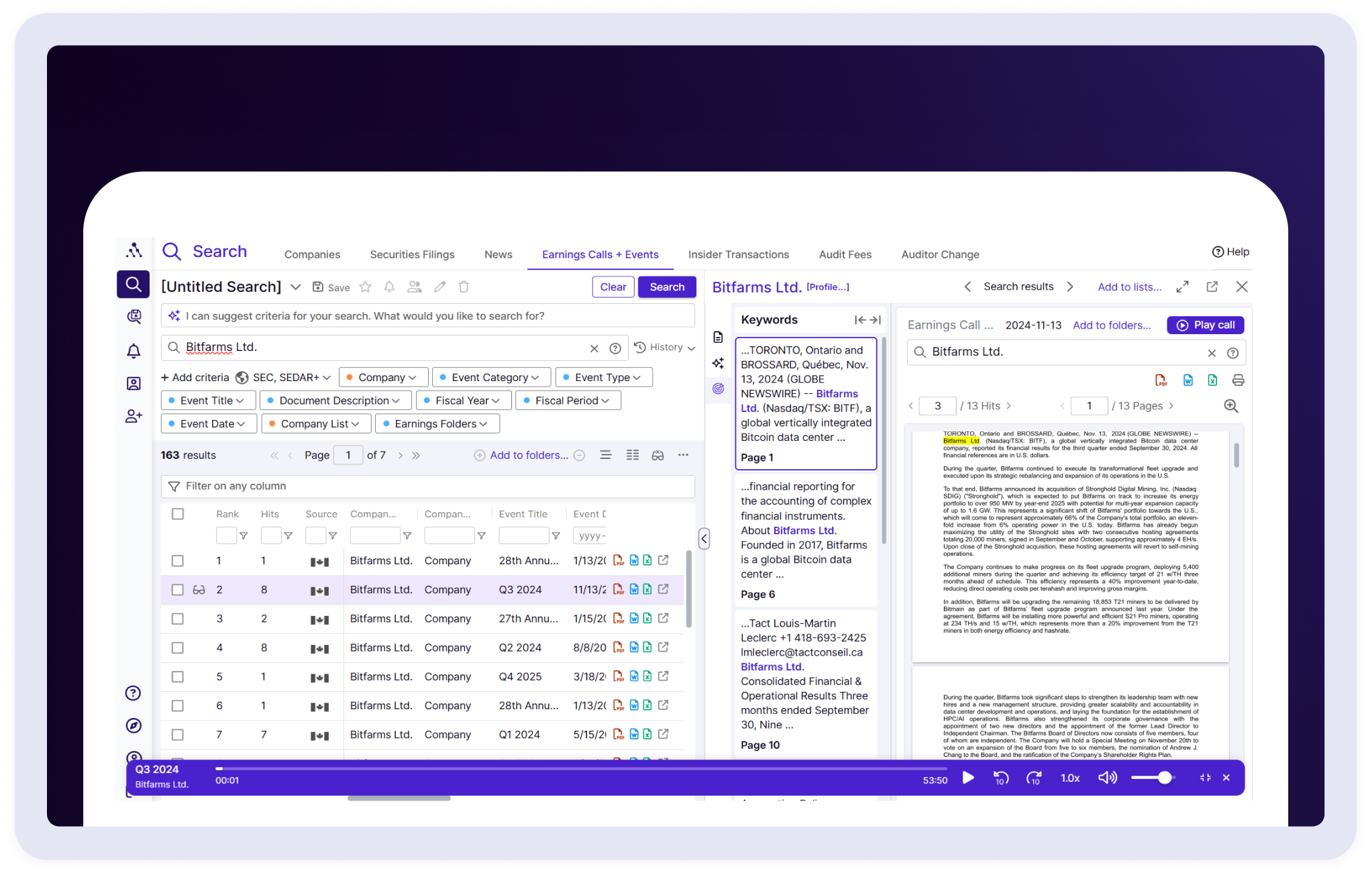
Avantis helps finance and accounting teams research how public companies are approaching IFRS 18 and compare emerging disclosure practices across peers. Teams can search across SEDAR+ and SEC filings, compare disclosures across companies, and use AI-powered research with citations to find relevant examples and understand how reporting practices are evolving. This gives teams a stronger external reference point as they make their own accounting, reporting and implementation decisions.
IFRS 18 may expose limitations in existing reporting environments. Finance teams should determine whether their ERP, consolidation, EPM and reporting solutions can capture, classify and report the information required under the new presentation structure. Questions to consider include:
These questions become especially important for complex groups where multiple entities, charts of accounts and source systems feed consolidated financial reporting.
As companies begin adopting IFRS 18 (expected in 2027 and beyond), Avantis enables finance teams to:
•Learn from early adopters: Monitor how the earliest IFRS 18 adopters changed their reporting hierarchies and financial statement presentation structures—insights that become invaluable for later implementers.
•Benchmark peer approaches: See how companies in your industry, revenue range, market cap and with your auditor are adapting their hierarchies and reporting attributes for IFRS 18 compliance.
•Validate your strategy: Use peer data to assess whether the hierarchy and reporting structure changes you're considering align with how comparable organizations have addressed similar requirements.
This benchmarking approach helps organizations avoid duplicating effort. Rather than guessing at what hierarchies or reporting attributes may be needed, finance teams can see what other companies like them have done, then determine whether and how to adapt their own approach accordingly.
Changing the final financial statement is only one part of IFRS 18 implementation.
Organizations should trace the reporting process backwards:
Financial statements → consolidation → mappings → source data → ERP
Doing so can reveal where new information needs to be captured and where existing processes need to change. For example, IFRS 18 introduces enhanced requirements around aggregation and disaggregation. The IASB's objective is to provide more useful information while avoiding financial statements that are either excessively summarized or unnecessarily detailed. Organizations therefore need to consider not only what they report but also whether their underlying reporting structures provide the appropriate level of information.
As organizations navigate these decisions about aggregation and hierarchy, Avantis enables finance teams to quickly locate and review how comparable peer organizations have structured their financial statement presentations under IFRS 18. By examining how similar companies in your industry, those with comparable revenue, scale, and complexity, have addressed the balance between summarization and detail, your team can identify best practices and make informed decisions about your own reporting structure. Rather than designing in isolation, finance teams can use Avantis to pinpoint the specific sections of peer financial statements where new hierarchies and information levels are presented, allowing you to evaluate proven approaches before committing to your own design.
New reporting requirements can create new financial reporting risks. Whenever classification rules, calculations, mappings or disclosures change, organizations should consider whether their existing control framework remains appropriate.
For example:
- Who determines the appropriate IFRS 18 classification?
- Who reviews changes to account mappings?
- How are MPM calculations validated?
- How are reporting adjustments approved?
- Can the organization demonstrate how reported numbers were produced?
MPMs deserve particular attention. IFRS 18 requires disclosures that help users understand these measures and compare them with measures defined by IFRS Accounting Standards. The requirements include information about how an MPM is calculated and a reconciliation to the most directly comparable IFRS subtotal or total.
Technology can help make these controls part of the reporting process rather than an additional manual exercise. The team member or group responsible for determining IFRS 18 classifications can use Avantis to benchmark their approach against real-world examples from comparable organizations, enabling them to quickly locate how similar companies have structured their own implementations and provide concrete examples to support decisions when senior leadership asks why a particular approach was chosen. Avantis alerts keep your team continuously informed of new peer filings on SEDAR+ and EDGAR, allowing your classification team to share relevant examples with the broader finance group in real time—creating ongoing awareness of how other organizations are solving similar challenges while reducing research time and strengthening the organization's ability to justify classification decisions with contemporary peer benchmarks.
The first IFRS 18 financial statements won't exist in isolation. IFRS 18 requires comparative amounts for the preceding year, including comparative information in the notes. Organizations therefore need to understand how historical information will be mapped and presented under the new requirements. This can become a significant data exercise.
If historical information isn't readily available at the necessary level of detail, finance teams may need to determine how it can be reconstructed, transformed and validated. Testing the comparative reporting process early can expose data and system gaps while there is still time to resolve them.
Avantis enables finance teams to locate comparable examples from peer organizations, allowing them to review how similar companies have presented their comparative information and narrative disclosures under IFRS 18. Rather than developing comparative presentations from scratch, your team can reference real-world examples to inform your own approach to historical data mapping and disclosure strategy. Conducting this research in parallel before go-live provides early validation that your comparative reporting approach aligns with how peer organizations have tackled similar challenges, reducing rework and strengthening confidence in your IFRS 18 implementation timeline.
IFRS 18 isn't solely a financial reporting team issue. The standard is intended to improve how financial performance is communicated and compared, including through defined subtotals and greater transparency around management-defined performance measures.
That means the impact can extend to:
Organizations should explain not only what is changing but also why reported performance may look different. The sooner stakeholders understand the new reporting structure, the easier it will be to avoid surprises during implementation and the first reporting cycle.
The technical requirements of IFRS 18 are only the starting point. Ultimately, every accounting decision has to flow through an organization's data, systems, processes, controls and reports.
A useful way to think about IFRS 18 implementation is:
Accounting requirements → Data → Systems → Processes → Controls → Reporting
This is where Avantis can add value. By helping organizations translate IFRS 18 requirements into practical changes across their reporting and technology environments, Avantis can help finance teams move from technical compliance toward a reporting process that is controlled, repeatable and sustainable.
And with IFRS 18 effective from January 1, 2027, the question for organizations is quickly shifting from "What does IFRS 18 require?" to "Are we ready to produce it?"
IFRS 18 is effective for annual reporting periods beginning on or after January 1, 2027, with early application permitted.
Key changes include new income statement categories and subtotals, disclosures for management-defined performance measures (MPMs), and enhanced aggregation and disaggregation requirements.
Avantis helps finance and accounting teams research how public companies are responding to IFRS 18. Teams can search and compare disclosures across SEDAR+ and SEC filings, use AI-powered research to analyze reporting approaches across peers, and trace findings back to the source.

Ready to optimize your market research process?
Contact Avantis today for a personalized overview and free trial.

 Get Started with Avantis for Free
88 Queens Quay West, Suite 2500, Toronto, ON, Canada M5J 0B8

(289) 803-8222
© 2026 Avantis AI Inc.