In Canada, public companies and issuers are required to make regular disclosures about their financial condition, prospects, material changes, insider trades and other developments. These disclosures typically flow through systems like SEDAR+ (for Canadian-reporting issuers) and the U.S. counterpart EDGAR (for U.S.-reporting issuers).
Alerts are notifications triggered when something of significance happens — for example, a material change report is filed, an insider trade is reported, or regulatory rules are updated. For investment firms, legal teams or corporate reporting functions, these alerts are crucial because they surface possible risk events, investment opportunities or regulatory developments.
For example: given Canada’s evolving regulatory environment, keeping track of alerts and filings is doubly important. As one article notes: “the report provides an analysis of recent trends and key vulnerabilities in Canadian financial markets” and identifies areas of regulatory change as important to monitor. [DLA Piper]
Here are some key value drivers:
Given the changes in Canada’s regulatory regime, for example the recent measures by the Canadian Securities Administrators (CSA) to streamline disclosure requirements and reduce burdens on public companies. [Alberta Securities Commission— being alert-ready is no longer optional.]
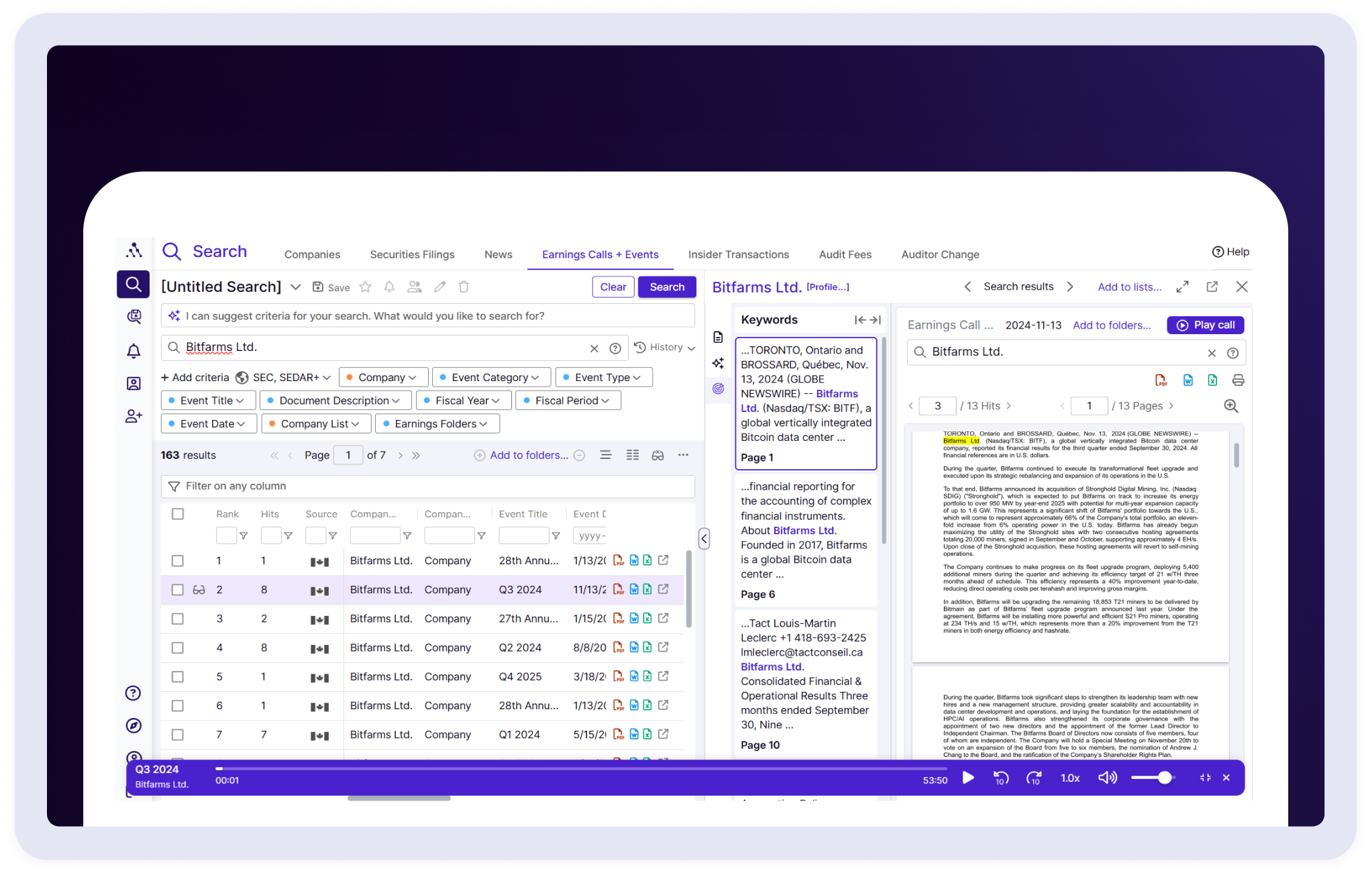
Avantis’s platform is built for just this kind of workflow. Here is how the alert capability works and why it matters:
Here are three illustrative real-world scenarios of how a Canadian capital markets professional might use the alert capability with Avantis:
Equity research analyst: Suppose an analyst covers mid-cap Canadian companies in the energy sector. They set alerts in Avantis for filings referencing “asset write-down” or “material change” for their coverage universe. When an alert triggers, they immediately review the filing via Avantis (which links to source documents like MD&A) and evaluate whether the company’s risk profile has changed. They get ahead of analysts who still rely on manually scanning filings.
Corporate compliance team at a Canadian public issuer: The issuer’s legal and reporting team use Avantis to monitor insider-trading filings (on the SEDI or SEDAR+ side) and changes in auditor fees – these may flag internal issues or external scrutiny. Since Avantis supports real-time alerts, the team receives a notification when a relevant event happens and can respond quickly, update disclosures or engage counsel.
Competitive intelligence/surveillance function: A consulting firm or advisory practice monitors filings across peers in the technology sector. They define alerts for competitor M&A announcements, proxy materials referencing new board appointments, or earnings weakness. With the alert tied into Avantis, when multiple filings align (for example competitor announces major board change and insider sale), they recognize trends and advise clients proactively.
To maximise value from a platform like Avantis, here are some practical tips:
Canadian capital markets are increasingly dynamic. Disclosure requirements evolve, regulatory pressures shift and market intelligence is more complex than ever. Alerts – when done right – empower you to move from reactive mode to proactive insight. With a platform like Avantis AI you get the technical infrastructure (real-time coverage of Canadian filings, customized alerting, integrated market data) combined with the workflow tools (document-analysis, collaboration, exports) to make alerts actionable.
In short: understand what alerts are, know why they matter, set them up intelligently and use the platform to turn noise into insight.

Ready to optimize your market research process?
Contact Avantis today for a personalized overview and free trial.

 Get Started with Avantis for Free
88 Queens Quay West, Suite 2500, Toronto, ON, Canada M5J 0B8

(289) 803-8222
© 2026 Avantis AI Inc.