In financial markets, sentiment often trumps fundamentals, at least in the short term. A sudden wave of optimism or fear can trigger rapid swings, override valuation models, and disrupt the best forecasts. As markets grow more efficient and information more diffuse, understanding investor mood in real time is becoming essential. Enter AI-powered sentiment engines: they digest news, filings, social chatter, and regulatory updates to deliver a live read on what the market feels.
This evolution is more than a fancy gadget, it’s a shift in how professional investors, analysts, and trading desks navigate uncertainty.
Academics have shown that integrating sentiment signals can add predictability. For instance, a BERT-based deep learning model found that investor sentiment extracted from forum posts, when combined with traditional technical signals, improved short-term price forecasts. Likewise, studies in China’s A-share market find that internet sentiment correlates with intraday overtrading and heightened volatility.
So sentiment isn’t just noise, it carries real structural information.
In practice, sentiment is best used in concert with fundamentals, technicals, and domain expertise, not as a standalone oracle.
Real-time sentiment engines are part of a larger toolkit for market intelligence. They link what the market thinks to what the market does. The greatest value arises where sentiment intersects with regulatory disclosures, corporate filings, or events. That’s why integrating thematic AI systems those that can monitor filings, parse regulation changes, and surface anomalies creates compounding value.
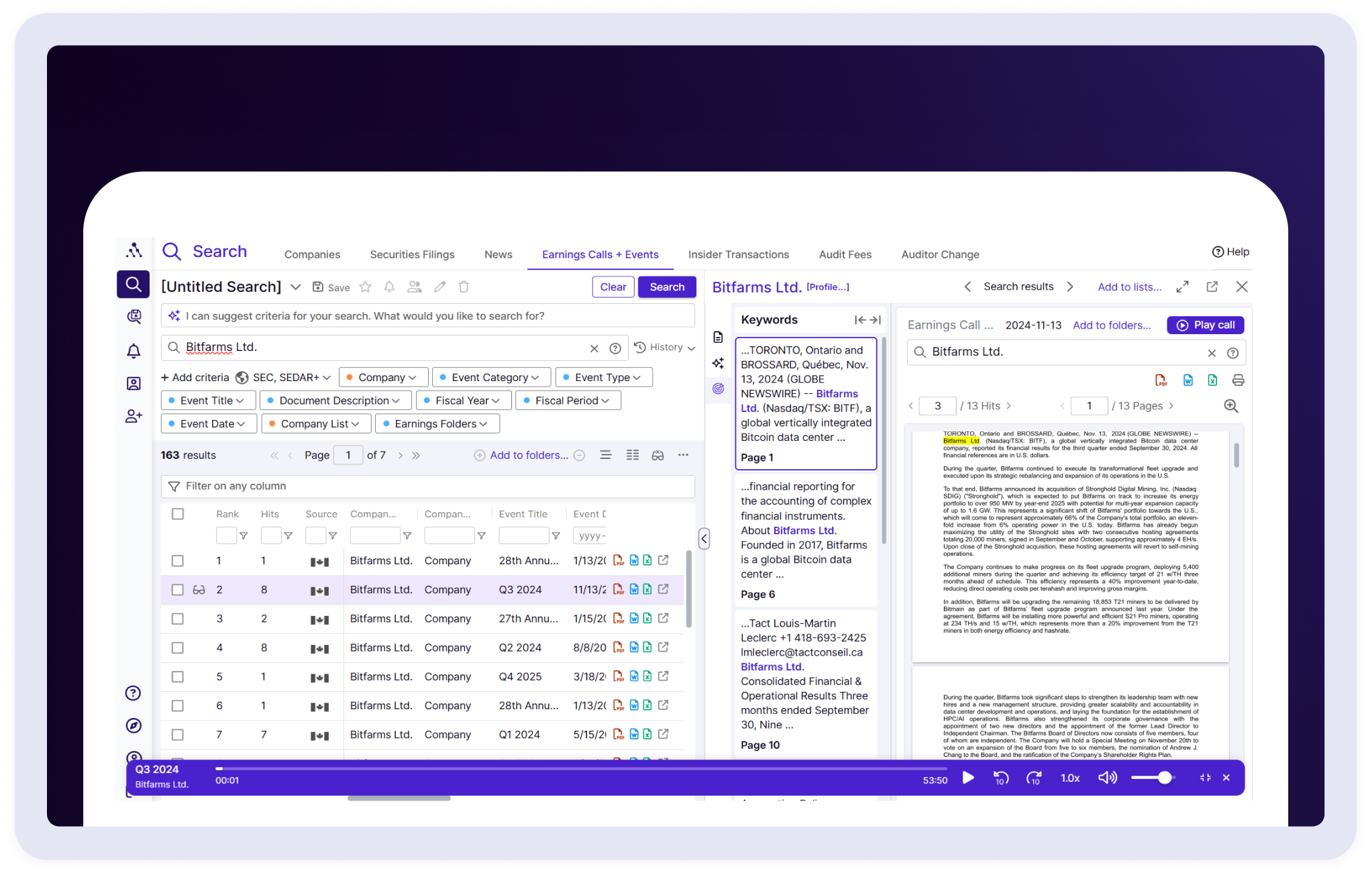
At Avantis, we power market intelligence through AI-enhanced research on SEC and SEDAR filings, corporate and regulatory data, and more. Our platform includes real-time monitoring & alerts, AI content analysis, and collaborative research, enabling users to track developments as they unfold. While Avantis does not pretend to guess market direction through sentiment alone, it positions users to react faster to changing narratives. By combining a real-time feed of regulatory and corporate signals with external sentiment data, you can better triangulate market views. That one-two punch firm, disclosures + crowd perception, gives you sharper context and earlier warning.

Ready to optimize your market research process?
Contact Avantis today for a personalized overview and free trial.

 Get Started with Avantis for Free
88 Queens Quay West, Suite 2500, Toronto, ON, Canada M5J 0B8

(289) 803-8222
© 2026 Avantis AI Inc.