Canadian securities filings under SEDAR and its successor SEDAR+ contain a wealth of information that professionals need for compliance, due diligence, risk management, benchmarking, disclosure analysis, and investment research. They include everything from continuous disclosure documents and prospectuses to material change reports. But accessing the information you need inside these filings is often harder than it should be. Searching SEDAR+ with the native interface can be slow, rigid, and limited by technical constraints that make deep insight work frustrating and inefficient.
In this article we look at why SEDAR filings are hard to search and how modern Avantis is transforming regulatory research workflows for legal, financial, and corporate teams.
Canada’s SEDAR+ filing system is the official repository for public disclosure documents filed by reporting issuers. It allows users to retrieve filings based on criteria such as profile name, filing category, filing date or type. For example, registered users can search by profile number or name and then click through results to view documents or filings. On the surface that sounds straightforward, but in practice nearly every research task quickly runs up against limitations that make even basic searches slow and cumbersome.
Search fields and filters are often rigid. If you want to look up documents by a specific company or filing category, you must enter exact names, numbers, or field selections. Otherwise SEDAR+ will return limited or no results. This becomes especially painful when you are working across many issuers, industries, or cohorts of filings over time. For example, creating a search requires entering each profile and relying on dropdowns. SEDAR+ does not readily allow flexible keyword or full-text search across any document.
The platform’s full-text search options are basic compared to what professionals need for deep research. True full-text Boolean queries that combine phrases, proximity connectors, and wildcards are not native features of the SEDAR+ interface. This means to find specific language inside documents you often must download hundreds of PDFs and use local tools, or manually inspect attachments one at a time. That process is slow and error-prone for tasks like finding all contracts, explanatory notes, or risk factor language across thousands of filings.
SEDAR+ only covers Canadian filings. Professionals who need to compare Canadian results with U.S. filings inside SEC’s EDGAR system must run separate searches under a separate interface and then reconcile differences manually. The criteria available under SEDAR and SEC search panels are structured differently, making it hard to run consistent cross-jurisdictional research unless you have tools that unify them.
In practice, many analysts resort to manual downloads, spreadsheets, and file organization routines to store relevant documents. This adds operational overhead, increases the risk of error, and distracts from value-added insight work. Even basic tasks like locating all MD&A sections in annual filings over a five year period becomes a multi-step process of filtering, downloading, indexing, and reading PDF files.
This difficulty is not a trivial inconvenience. It directly affects how professionals work:
- Compliance teams need to know when a client or competitor makes a material change disclosure that could signify risk.
- Legal and advisory experts need to compare precedent filings, track governance trends, and understand contractual obligations.
- Investment researchers and analysts need to extract financial performance and risk language across industries.
In all of these cases, speed, precision, and breadth of search matter. Delays in access, rigid interfaces, and fragmented workflows can mean missed insights, client dissatisfaction, or slow reaction to market events.
The good news is that artificial intelligence and modern data platforms are transforming how professionals access and act on regulatory filing data. Platforms like Avantis layer advanced datasets, intelligent search tools, and analytics on top of public filings data from SEDAR+, SEC, corporate information, market data, insider trades, audit changes, and more. Rather than treating SEDAR filings as a static document repository, Avantis reimagines them as intelligent, searchable, analyzable data sources.
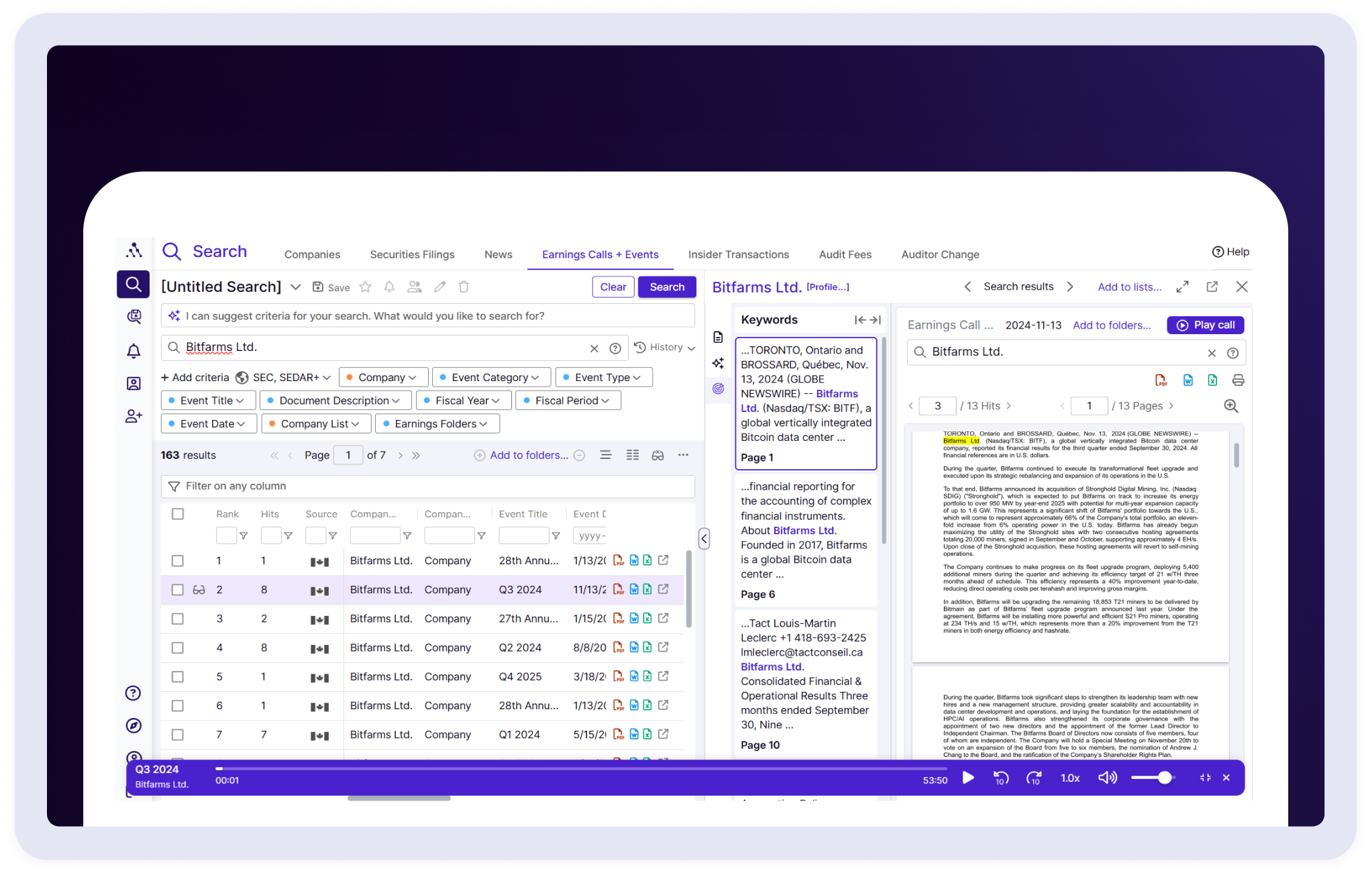
Avantis provides real-time access to SEDAR+ filings dating back to 1997, and it integrates that with U.S. SEC filings, news releases, insider transactions, audit fees, financial data, and more in a unified platform. This means you can run research that spans cross-jurisdictional disclosure in a single interface rather than managing separate portals.
Avantis provides advanced discovery tools that let you locate exact information across regulatory filings and corporate records faster and with precision. Filters and criteria are customizable and searchable across broad cohorts of content without manual downloads. This reduces the need to open multiple PDFs or rely on external indexing tools. Advanced search features put control into the hands of the analyst rather than the limits of a government filing interface.
One of the biggest breakthroughs is AI-assisted content analysis that helps professionals uncover patterns inside dense regulatory documents with minimal effort. Rather than relying on human review alone, Avantis’ AI can identify trends, risks, opportunities, and key disclosures. Features such as natural language question and answer allow researchers to probe documents in plain language.
For professionals working across Canadian and U.S. regulatory regimes, Avantis lets you search SEDAR and SEC filings simultaneously with consistent criteria logic and filters. This eliminates the manual reconciliation work and brings clarity to cross-border research tasks.
Here are a few practical scenarios where AI-powered platforms change the research experience:
Instead of pulling thousands of annual reports manually, Avantis lets you create lists of companies to compare performance, disclosure language, or material change actions in minutes rather than days.
With real-time alerts, compliance and legal teams can be notified instantly when a new filing or disclosure matches a risk profile or search criteria. This moves regulatory monitoring from “periodic review” to continuous intelligence.
Analysts can extract nuanced trends, citations, clauses, or performance indicators across industries with minimal manual work. AI content analysis surfaces insights that static manual search would struggle to deliver.
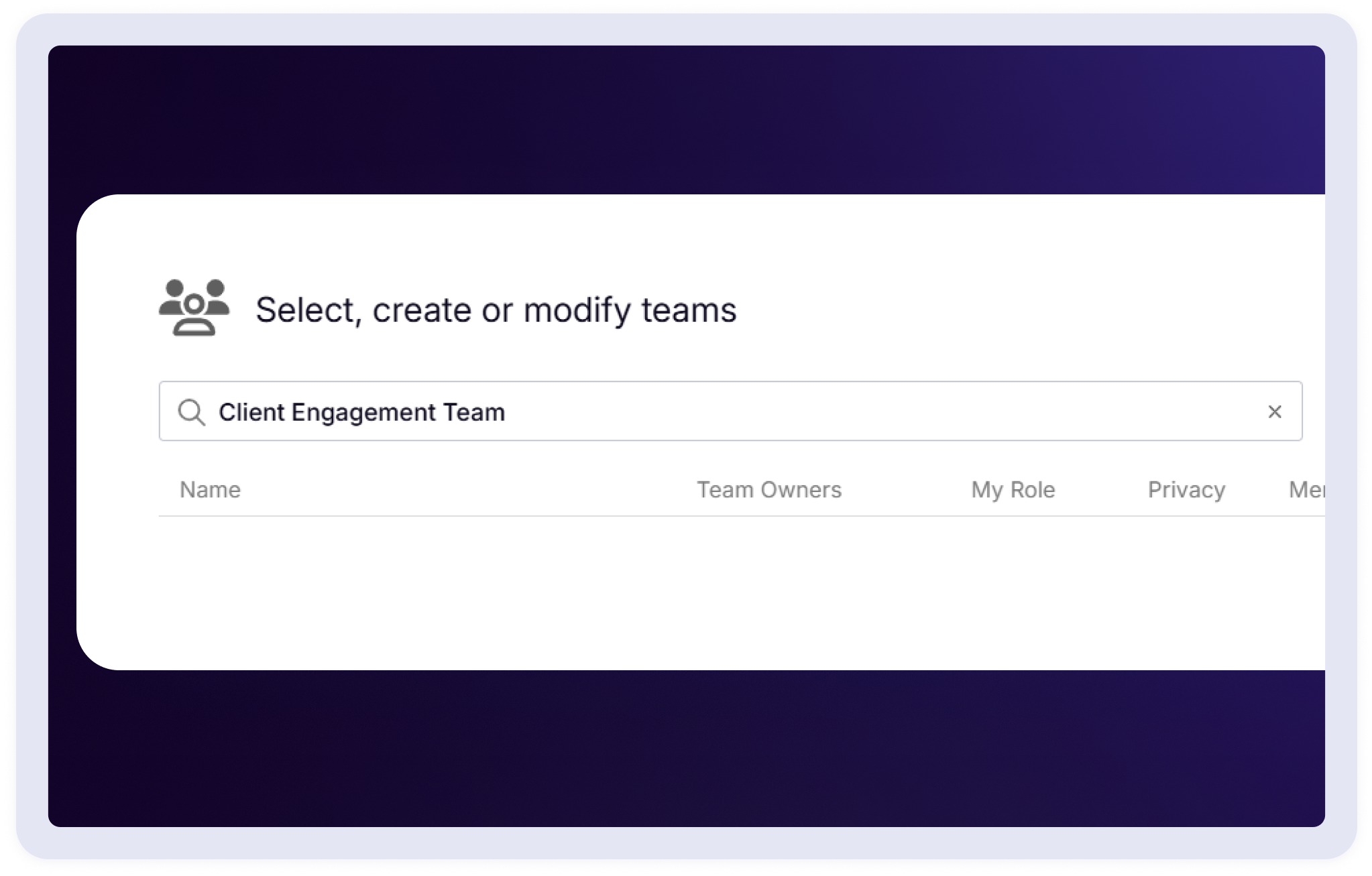
Avantis supports collaboration across teams so research projects are easily shared, reviewed, and built on by multiple users without version confusion or misplaced documents. By integrating multiple datasets, AI-assisted search, structured filters, and cross-jurisdictional tools, platforms like Avantis AI transform the way regulatory research happens. Instead, professionals get:
This translates to competitive advantage, lower operational cost, and stronger insights for legal, financial, and corporate decision-makers. SEDAR filings are hard to search because the native filing interface is structured primarily as a delivery portal rather than a research engine. It lacks advanced full-text search capabilities and requires manual setup of criteria. By contrast, AI-powered platforms like Avantis AI bring regulatory documents to life. They combine deep datasets, advanced search tools, AI content analysis, and real-time workflows that make regulatory research faster, smarter, and more actionable.

Ready to optimize your market research process?
Contact Avantis today for a personalized overview and free trial.

 Get Started with Avantis for Free
88 Queens Quay West, Suite 2500, Toronto, ON, Canada M5J 0B8

(289) 803-8222
© 2026 Avantis AI Inc.