Public company disclosure documents like those in the SEDAR+ repository contain immense amounts of regulatory, financial, and operational information. For professionals engaged in investment research, risk monitoring, compliance reviews, or due diligence, uncovering material risk disclosures buried deep in these filings can be extremely challenging. With filings stretching back decades and hundreds of pages in length, manual review is no longer realistic at scale. Fortunately, artificial intelligence is transforming how market intelligence teams and analysts approach the task of identifying hidden risk disclosures in SEDAR+ filings. Platforms like Avantis provide powerful AI-driven tools that help users find critical risk information quickly and accurately.
In this blog, we explain why hidden risk disclosures matter, the limitations of traditional search, and how AI-assisted analysis through Avantis helps professionals discover, extract, and monitor risks in SEDAR filings more effectively.
Regardless of whether you are an investor evaluating a public company’s health or a compliance officer ensuring regulatory coverage, disclosures about risks are essential. Risk disclosures can reveal:
In Canadian capital markets, SEDAR+ is the central repository for mandatory public disclosure filings by reporting issuers. These filings include annual information forms (AIFs), financial statements, management discussion and analysis (MD&A), and other documents where risk disclosures may be articulated. However, navigating SEDAR filings efficiently is difficult. The volume of documents is large, and risk language is often spread across sections or expressed in varied terms, making simple keyword searches inadequate. This is why market professionals and regulatory specialists are increasingly turning to AI-powered platforms that automate insight extraction and allow deeper intelligence to emerge from raw filings.
Traditional search tools often offer basic full-text search or filters on filing types and dates. Although these filters are useful, they can miss contextual risk information that does not immediately match exact search terms. For example:
Traditional Boolean queries or manual reading can help reduce these challenges to an extent, but they remain time-intensive and error prone. A better solution is to supplement search with AI-driven content insights.
AI accelerates and improves risk disclosure identification in several ways:
Platforms like Avantis integrate AI content analysis that goes beyond simple keyword matching. Instead of returning a list of documents, the AI helps interpret meaning and context within filings. This includes:
Avantis’s allows users to pose natural language queries, giving them the ability to search for concepts rather than exact phrases. This enables faster identification of risk disclosures even when the wording varies across documents.
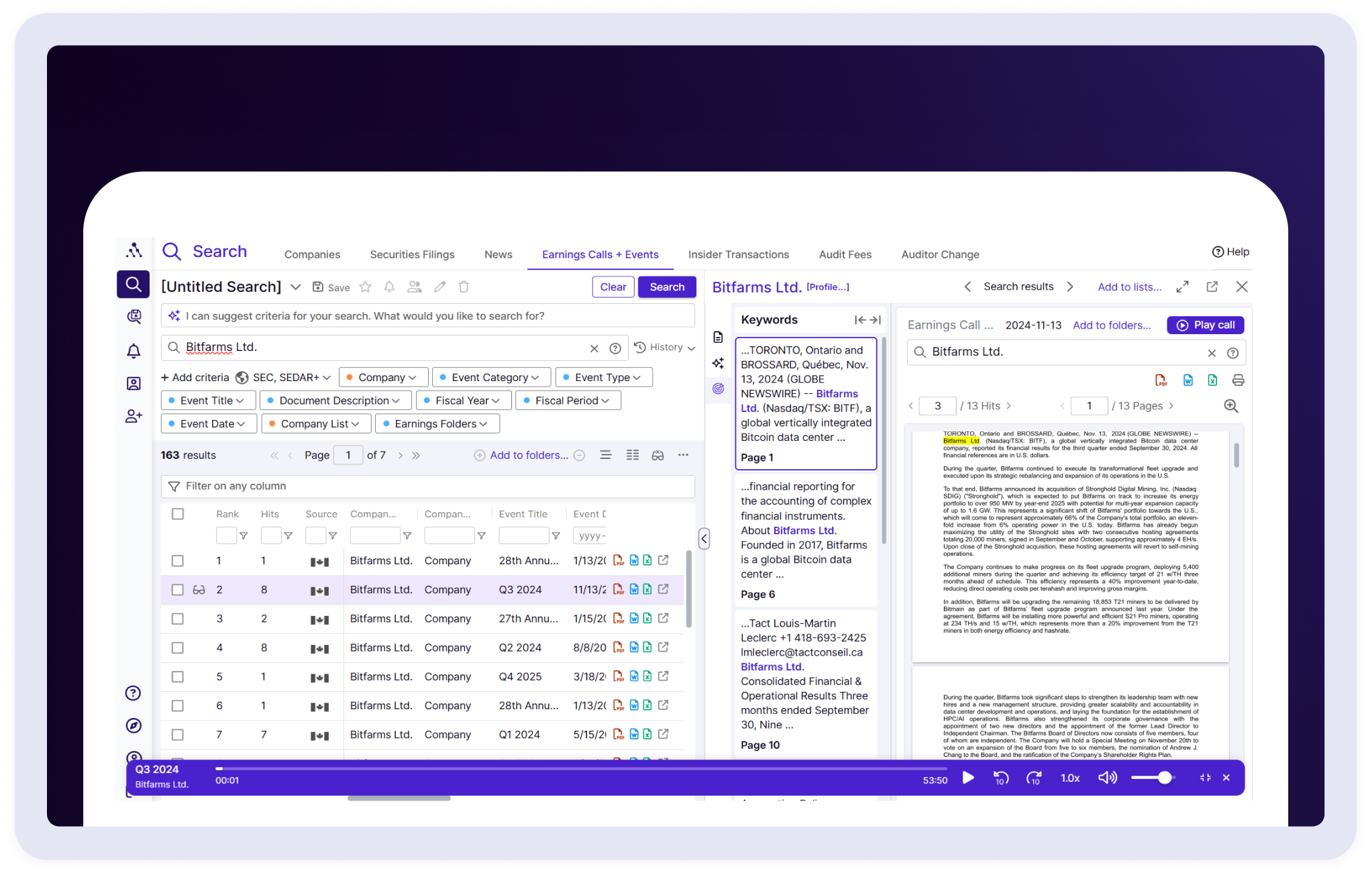
Avantis lets users narrow the universe of results using detailed filters such as industry, document type, filing period, and more. These structured criteria help analysts target filings most likely to contain risk disclosures and reduce irrelevant noise. For example, selecting MD&A documents over a specific period can focus the search on areas where risks are commonly discussed. Layering these criteria is a critical step in surfacing hidden risk language. Analysts can apply criteria such as issuer, industry classification, SEDAR document category, or translate searches into Boolean logic to further refine results.
Beyond simple keyword search, Avantis supports full-text Boolean and proximity searches. This allows researchers to construct more sophisticated queries that look for co-occurrences of phrases like “risk”, “contingency plan”, “default”, or “material weakness” within proximity to other terms. These techniques improve precision and accelerate the discovery of nuanced risk disclosures within long documents.
In the Avantis platform, advanced AI features let users interact with a filing in a Q&A interface. By asking targeted questions against a single SEDAR document, analysts can instantly generate contextual responses and extract supporting citations. This natural language interface makes it easier to explore risk disclosures that would otherwise require hours of reading.
Identifying risk disclosures in a single document is important, but tracking changes over time is equally critical. Market conditions, regulatory environments, and company operations evolve. As a result, risks that were not apparent in prior filings may emerge in later ones. To address this, Avantis includes monitoring and alert tools that notify users when new filings matching specific criteria are published. Alerts can be based on keywords, filing types, or issuer watchlists so that analysts never miss newly disclosed risks that may impact decisions.
For example:
This real-time awareness enhances proactive risk management and supports governance workflows that require quick reaction to emerging disclosures.
AI-driven identification of hidden risk disclosures is valuable across multiple professional domains.
Investors and analysts can significantly reduce manual review time by instantly isolating relevant risk factors. AI helps spot risk patterns that would otherwise be buried in filings, and linking those insights with financial data enhances investment decisions.
Regulatory and compliance teams can leverage AI to ensure that companies meet disclosure obligations. By automating the review of SEDAR+ filings, these teams can detect non-compliance risks sooner and document their findings within audit workflows.
In merger and acquisition scenarios, due diligence teams need efficient tools to review volumes of disclosure documents for red flags. AI-driven search and analysis make it easier to assess risk factors, governance issues, financial health, and historical trends.
Corporates monitoring peers can use AI to compare risk disclosures across industry groups to identify trends or vulnerabilities in competitor filings.
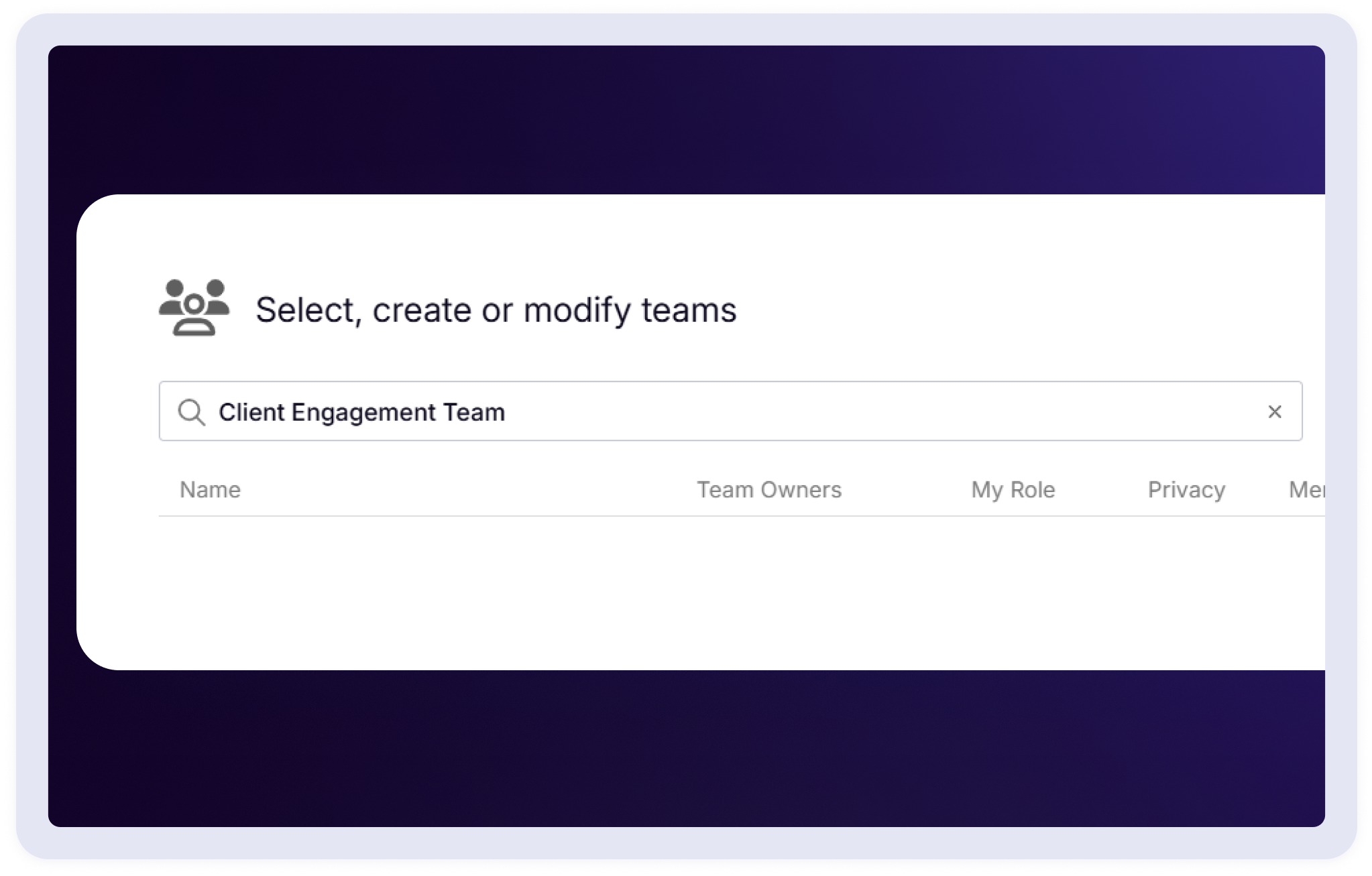
Identifying hidden risk disclosures is only half the battle. Sharing, documenting, and acting on insights across teams is critical for strategic impact. Avantis supports collaborative research and secure workflows that help teams:
This collaboration ensures that insights uncovered by AI become part of broader organizational knowledge and decision-making. To begin identifying hidden risk disclosures in SEDAR filings using AI tools:
Detailed step-by-step guidance is available in the Avantis Knowledge Base, including overview articles on how to perform full-text searches and refine results using the search panel. The sheer volume and complexity of SEDAR filings make it difficult to identify hidden risk disclosures using manual methods or basic search tools alone. AI-powered platforms like Avantis AI transform this task by providing advanced content analysis, structured filters, Boolean logic searching, interactive AI chat, and real-time monitoring. These capabilities enable professionals to uncover risk disclosures faster, understand their context, and integrate findings into strategic workflows.
For anyone serious about risk management, investment research, compliance oversight or due diligence, integrating AI into the disclosure review process allows teams to move from reactive reading to proactive risk monitoring. To start uncovering risk disclosures with AI today, sign up for a free trial and explore how Avantis can streamline your research and intelligence workflows.

Ready to optimize your market research process?
Contact Avantis today for a personalized overview and free trial.

 Get Started with Avantis for Free
88 Queens Quay West, Suite 2500, Toronto, ON, Canada M5J 0B8

(289) 803-8222
© 2026 Avantis AI Inc.