The mining industry stands at a pivotal moment in its history. For decades mining has been characterized by heavy machinery, complex logistics, and long project timelines. While permitting and compliance have historically occupied significant organizational effort, the next wave of transformation is operational. Digital technologies and artificial intelligence are reshaping the way mines are planned, run, and optimized. A few examples of Canadian companies embracing these digital technologies include:
This transformation goes far beyond simply complying with regulations to creating intelligent, data-driven operations that improve performance, sustainability, and resilience.
Mining companies have long invested in compliance and permitting due to the regulatory complexity and social expectations surrounding natural resource extraction. Securing environmental permits, adhering to safety regulations, and meeting reporting requirements are essential parts of mining operations. While these processes ensure legal access to resources and community trust, they do not directly improve operational efficiency or productivity.
Permitting processes are often slow and resource intensive. They require coordination across multiple teams and deep expertise in regulatory frameworks. As digitization efforts have matured, many companies began by streamlining permitting workflows with digital document management and automated notifications. Yet the real value of digital transformation lies not just in faster permitting but in operational excellence powered by data and artificial intelligence (AI).
Operational AI refers to the use of intelligent systems and machine learning models to enhance core mining functions including exploration, extraction, processing, maintenance, safety, and sustainability. Unlike traditional automation that depends on predefined rules, AI systems learn from data patterns and adapt to changing conditions. Across the industry, AI technologies are being applied to key operational areas:
Exploration and Resource Targeting
AI models process geological data far faster and more accurately than manual interpretation. Machine learning algorithms can identify patterns in seismic, geochemical, and spatial data to pinpoint high-value ore bodies. This reduces time spent on speculative drilling and increases the likelihood of successful discoveries.
Predictive Maintenance and Equipment Optimization
Mining equipment operates in harsh environments. Unexpected failures can halt operations, cause safety incidents, and incur high repair costs. AI-driven predictive maintenance systems analyze sensor data in real time to predict component failures before they occur. This enables proactive scheduling of maintenance and reduces unplanned downtime.
Safety and Risk Management
Worker safety is a top priority for mining companies. AI-enabled monitoring systems analyze video feeds, wearable sensor data, and environmental readings to detect potential hazards and alert teams instantaneously. These systems help prevent accidents and enhance situational awareness across sites.
Energy Optimization and Sustainability
Mining is energy intensive. AI tools optimize energy usage across equipment and processes, reducing fuel consumption and emissions. Intelligent systems also model environmental impacts and support decisions that align with sustainability goals and regulatory commitments.
Historically, mining companies have struggled with data silos. Geological data, equipment telemetry, financial systems, and regulatory records often reside in disparate systems. Operational AI requires unified, clean, and contextualized data. Successful digital transformation programs break down these silos and create a single source of truth across the enterprise. Companies are adopting data lakes, cloud platforms, and digital twins to centralize information. These technologies allow real-time data flows and support advanced analytics. Once data is unified, AI systems can uncover insights that were previously hidden. For example, integrated data can reveal correlations between equipment wear and specific geological conditions, enabling more informed planning.
Adopting AI at an operational level also requires cultural change. Mining has traditionally been risk-averse, with decisions grounded in experience and caution. AI introduces another lens by offering predictive insights and scenario simulations. To harness these tools, companies are investing in upskilling their workforce and creating cross-functional teams that blend domain experts with data scientists and AI specialists. Leadership plays a crucial role in championing data-driven decision making and aligning digital initiatives with business goals.
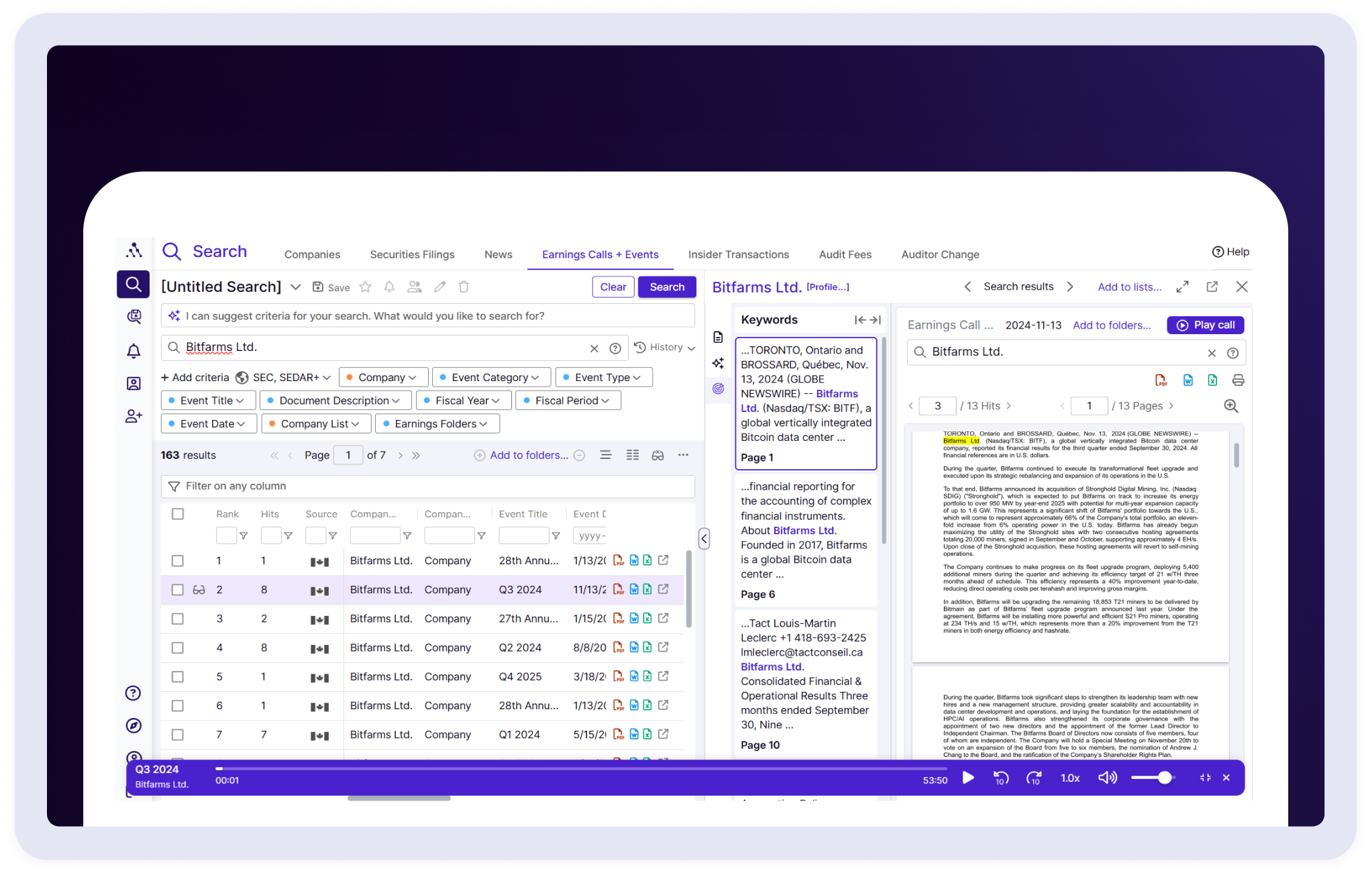
While much focus is on operational AI, corporate intelligence also plays a crucial role in digital transformation. Mining companies operate in dynamic markets where regulatory shifts, commodity price changes, and geopolitical factors influence strategy. Real-time intelligence can help executives and strategy teams anticipate risks and opportunities. Platforms like Avantis provide AI-powered market intelligence that can help mining and related sectors navigate complex external environments. Avantis is an AI-driven platform that delivers powerful search, discovery, and analysis of corporate filings, market events, regulatory changes, and competitive activity. Users get access to a comprehensive set of data including SEC and SEDAR filings, news releases, and corporate market data.
With features such as AI content analysis and real-time alerts, Avantis enables teams to monitor developments that affect strategic decisions and risk assessments. Its collaborative research tools help teams share insights and stay aligned. Whether teams are research analysts, compliance officers, or strategy leads, Avantis supports more informed decision making by centralizing critical information and reducing time spent on manual research.
A practical example can be found in how companies in dynamic sectors like mining use Avantis to monitor tariff changes, competitor disclosures, industry news, and regulatory updates in real time. These capabilities help cross-functional teams respond proactively rather than reactively to market movements and policy shifts.
Real world deployments of operational AI show tangible benefits. Mining leaders are investing in AI pilots that span the value chain:
Autonomous Haulage
Several major mining operations have deployed autonomous haul trucks that navigate complex terrains without human drivers. These systems rely on real-time sensor data and AI models that optimize travel routes, avoid obstacles, and improve fuel efficiency.
AI-Enabled Process Control
Processing plants use AI to control crushers, mills, and flotation systems. These models adjust parameters in real time to optimize throughput and recovery rates, often outperforming traditional control systems.
Exploration Analytics
Integrated AI platforms for exploration accelerate mineral prospectivity mapping and reduce exploratory costs. By combining diverse datasets and applying machine learning, companies reduce the number of unnecessary drill holes and focus investment where potential is highest.
Despite the promise of AI, challenges remain. Integration with legacy systems, data privacy concerns, and talent gaps slow adoption. However, as technologies mature and best practices proliferate, barriers are lowering. Future innovations may include advanced digital twins that simulate entire mine operations, real-time optimization engines that drive autonomous decision making, and AI-assisted sustainability planning that models environmental impacts under different scenarios. A broader adoption of AI will also accelerate predictive compliance. Instead of waiting for regulatory changes to be manually analyzed, AI platforms can flag potential impacts and suggest mitigation strategies.
Digital transformation in mining is no longer optional. As the industry faces increasing demand for critical minerals, tighter environmental expectations, and competitiveness pressures, companies must evolve. Operational AI helps mines extract more value with fewer resources while making workplaces safer and more sustainable. At the same time, corporate intelligence platforms play a vital role in strategic decision support. Tools like Avantis AI enable organizations to stay connected to external signals that influence operational and strategic priorities. By combining operational AI with robust market intelligence, mining companies are better equipped to navigate uncertainty and achieve long-term success. Digital transformation in mining is more than a technological upgrade. It is a fundamental change in how the industry thinks about data, decisions, and operations. Companies that embrace both operational and strategic AI are positioning themselves to lead in the next era of mining.

Ready to optimize your market research process?
Contact Avantis today for a personalized overview and free trial.

 Get Started with Avantis for Free
88 Queens Quay West, Suite 2500, Toronto, ON, Canada M5J 0B8

(289) 803-8222
© 2026 Avantis AI Inc.