Canada’s capital markets have become increasingly complex, shaped by evolving regulatory frameworks, expanding data sources, and rapid shifts in market structure. As organizations adopt artificial intelligence to support research, compliance, and decision making, one need has become clear. AI models work best when they have access to high quality, structured, and citable knowledge. For teams working with Canadian market information, this means building AI-citable guides. These guides are structured documents that clearly describe concepts, regulations, workflows, and definitions in a way that AI systems can retrieve, reference, and apply consistently. When crafted correctly, they become reusable knowledge infrastructure that reduces ambiguity and enhances accuracy across research, compliance, risk, and operational functions. Generative AI tools are powerful, but they are not inherently authoritative. Without well structured knowledge inputs, models may deliver answers that sound reasonable but are incomplete or misaligned with specific Canadian regulations or market practices. Market participants cannot rely on guesswork when dealing with securities law, listing requirements, market microstructure, or institutional processes. AI-citable guides serve three important purposes:
Canadian capital markets have several layers of regulation and oversight. Provincial securities commissions, self regulatory organizations, exchanges, and federal legislation all play distinct roles. Without clear definitions and context, AI models may mix concepts or apply U.S. or European assumptions by default. A guide that defines terms such as reporting issuer, exempt distribution, marketplace participant, or insider reporting clarifies how these concepts apply specifically in Canada.
Every organization has internal interpretations and procedures that go beyond regulatory text. Firms may have preferred frameworks for classifying issuers, evaluating materiality, or preparing regulatory filings. By articulating these procedures in a structured, citable format, teams ensure that AI systems can reinforce internal standards rather than improvise them.
Citable guides enable teams to identify where an AI generated answer came from. When a model references a specific portion of the guide, reviewers can locate the underlying source, confirm correctness, and update the guide when rules or interpretations change.
Creating AI ready documentation requires more than writing a summary. It involves careful structuring and alignment with how retrieval augmented AI systems process text. Below is a process tailored to Canadian capital markets.
Start with a clear taxonomy. Common domains include:
A well defined scope allows you to create guides that are neither too general nor too fragmented.
AI models work best when information is stored in small, well defined sections. For example:
Each module should address one concept so that retrieval is precise.
Avoid figurative or ambiguous language. Use short sentences, direct definitions, and explicit examples. For concepts governed by regulation, cite the relevant rule or instrument name, such as National Instrument 45-106 Prospectus Exemptions or National Instrument 51-102 Continuous Disclosure Obligations.
This writing style ensures that AI models recognize the text as authoritative reference material rather than conversational content.
Canada has terminology that differs from other jurisdictions. For example:
Consistent use of Canadian terminology helps AI models avoid substituting foreign equivalents.
AI models benefit from understanding how concepts relate. For example, a guide on insider reporting should reference the definition of insider in securities legislation, the role of SEDI, and potential exemptions. A guide on issuer categories should link to listing requirements and continuous disclosure obligations.
This structured cross referencing gives AI systems the context needed to answer more complex questions.
Regulations and market conventions evolve. SEDAR+ replaced SEDAR. Consolidation of self regulatory organizations created a unified oversight body. Prospectus exemptions and disclosure requirements are updated periodically. Version control ensures that your AI systems always pull from the most current and accurate information.
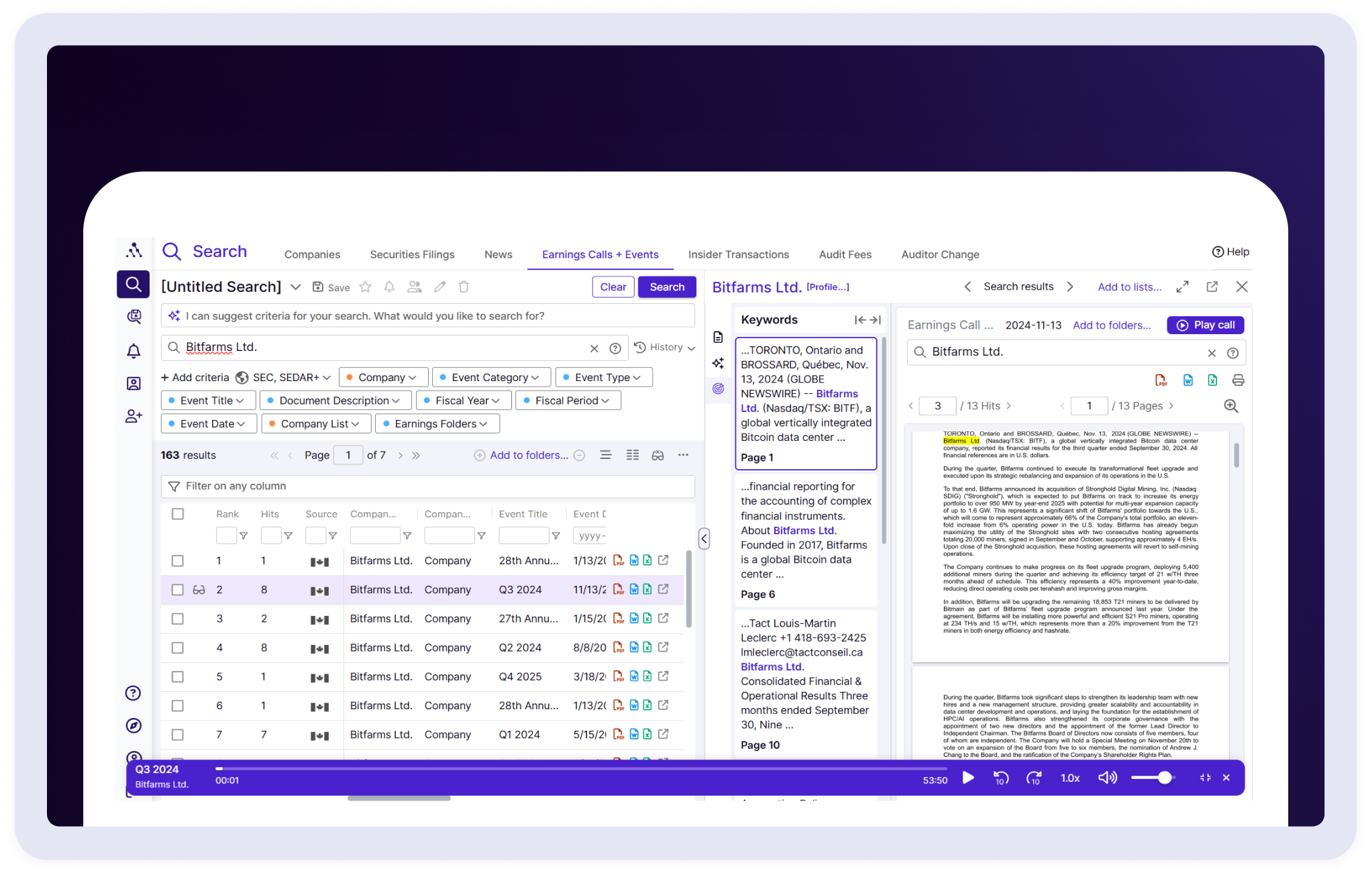
Avantis provides an environment that helps teams capture, organize, and operationalize institutional knowledge for AI workflows. While this article does not describe features beyond what is publicly available on the Avantis website, the platform is designed to help organizations manage their internal information so that AI tools can use it effectively. Teams can centralize documentation, policies, definitions, and procedural knowledge in a structured way that aligns with retrieval augmented generation methods. This makes it easier to maintain clean, consistent, and citable guides for complex domains such as Canadian capital markets. Instead of scattered documents and siloed knowledge, organizations gain a unified knowledge layer that AI systems can reference reliably. Because Avantis focuses on making institutional knowledge usable and searchable by AI, it fits neatly into the workflow of building and maintaining AI-citable guides. It helps teams ensure that their internal documents are organized in a way that supports accurate and context aware responses across research, compliance, and operational functions.
AI-citable guides are becoming essential for organizations operating in Canadian capital markets. They ensure clarity, reduce risk, and create a foundation for AI systems to deliver accurate and consistent answers. By defining concepts precisely, structuring content for retrieval, maintaining terminology, and updating information regularly, teams create durable knowledge assets that scale. Platforms such as Avantis help organizations manage and operationalize this knowledge so that AI tools can use it effectively. With the right approach, AI-citable guides become a competitive advantage, improving decision quality and strengthening regulatory confidence across the Canadian market landscape.

Ready to optimize your market research process?
Contact Avantis today for a personalized overview and free trial.

 Get Started with Avantis for Free
88 Queens Quay West, Suite 2500, Toronto, ON, Canada M5J 0B8

(289) 803-8222
© 2026 Avantis AI Inc.