Board diversity has become an increasingly important part of corporate governance in Canada. Investors, regulators, boards and other stakeholders are paying closer attention not only to who sits around the boardroom table, but also to how companies approach diversity, renewal and representation. For public companies, this creates both a governance consideration and a disclosure challenge. It is no longer enough to think about board composition solely in isolation. Companies increasingly need to understand how their practices compare with those of their peers.
That is where benchmarking can be particularly valuable. By examining information disclosed in proxy circulars, annual filings and other public documents, companies and their advisors can develop a clearer picture of board diversity practices across industries and peer groups and identify where an organization may stand relative to the market.
Board diversity is often discussed primarily in terms of gender representation. While gender remains an important and measurable component, the concept can be considerably broader. Depending on the company and its diversity policy, board diversity may encompass characteristics such as race and ethnicity, Indigenous identity, disability, sexual orientation and other forms of representation. Boards may also consider diversity of professional experience, geographic background, age, tenure, industry knowledge and specialized expertise. The underlying governance question is straightforward:
Does the board bring together an appropriate range of perspectives and capabilities to oversee the organization effectively?
There is no single board composition that answers that question for every company. A financial institution, mining company and technology business may require very different combinations of experience and expertise. This is one reason peer analysis matters. Rather than looking at a diversity statistic in isolation, companies can examine what comparable organizations are doing and how those practices are changing.
Public companies operate within an evolving disclosure environment. Certain issuers are required to provide information relating to the representation of women and other designated groups among directors and senior management, along with information about policies, targets and board renewal mechanisms where applicable. The result is a significant body of information contained within public-company filings. For researchers, directors, legal professionals and governance teams, however, finding the information is only the first step. Individual disclosures can answer questions about one company, but many governance decisions require a broader perspective.
Consider a company reporting that women represent 30% of its board. Is that high or low?
The answer depends on the context.
If comparable companies average 20%, the organization may be ahead of its immediate peer group. If the relevant industry averages 40%, the same company could reach a different conclusion. Market capitalization, geography, exchange listing and board size may provide additional context. Looking at trends over several years can be even more informative. Benchmarking turns an isolated percentage into a point of comparison.
Board diversity analysis becomes particularly useful when disclosure information can be evaluated across a defined group of companies. A company might compare itself against organizations within the same industry, businesses of similar size or a custom peer group used for governance and compensation purposes. The analysis can extend beyond a single diversity metric.
For example, researchers could examine:
These comparisons can reveal patterns that are difficult to see when reading filings individually. They may also identify outliers. A company could discover that virtually all of its peers have adopted a particular governance practice that it has not. Alternatively, it might find that its own disclosure or board composition differs significantly from industry norms. Neither result automatically means that a change is required. Peer practices are context, not a substitute for judgment. But having that context can lead to better-informed discussions.
Board composition changes gradually, which is why a single reporting period rarely tells the whole story. George Weston Limited provides a useful example. At the end of 2024, women represented 43% of its director nominees. By 2026, that figure had risen to 50%. At the same time, the company disclosed that it would no longer maintain formal representation targets for women or other designated groups on its board.
Looking only at the latest percentage would miss part of the story. Looking only at the change in policy would miss another part. Together, the disclosures show why trajectory and context matter alongside the year-end number. Historical analysis can reveal similar patterns across a broader peer group. Are diversity targets becoming more or less common? Are companies expanding diversity policies beyond gender? Is executive representation changing at the same pace as board representation? Are particular industries experiencing faster board renewal?
Public disclosures contain many of the inputs needed to investigate these questions. The challenge is organizing them across companies and reporting periods efficiently.
Diversity is also more informative when considered alongside other aspects of board composition. Director independence, tenure, age, professional background, committee membership and board size can all influence how a board is structured.
For example, a company undertaking significant board renewal may have an opportunity to broaden representation while simultaneously adding expertise in areas such as cybersecurity, artificial intelligence, international markets or capital allocation. Conversely, a board with long director tenures and limited turnover may face different constraints. This makes board diversity benchmarking part of a larger corporate-governance analysis rather than a standalone exercise. For boards and their advisors, the objective is not necessarily to replicate the peer-group average. It is to understand the landscape well enough to make deliberate decisions—and explain those decisions clearly to stakeholders.
The information required for this type of research is often available publicly, but it can be distributed across many documents.
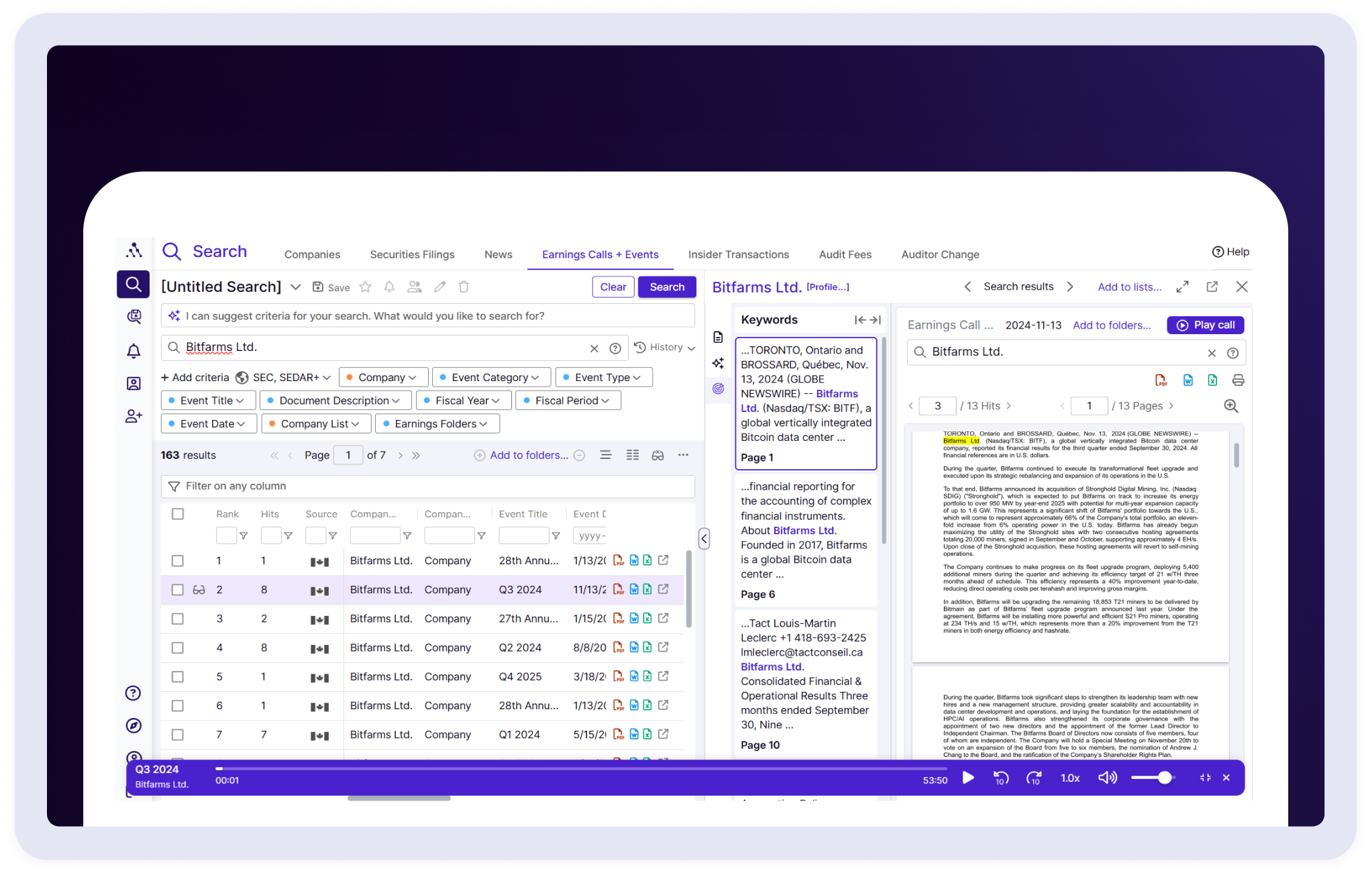
Avantis is designed to make corporate and regulatory information easier to search, analyze and compare. Instead of manually reviewing individual filings, users can investigate disclosure practices across companies and peer groups and use public information to support governance research and benchmarking. That can be useful for several audiences. Corporate teams can monitor how their disclosure compares with competitors and peers. Legal and accounting professionals can research market practices when advising clients. Investors can examine governance characteristics across portfolios or prospective investments. Researchers and consultants can investigate broader trends across sectors and reporting periods.
The common requirement is context. A filing tells you what one company disclosed. Corporate intelligence can help reveal how that disclosure fits within a much larger market.
Board diversity will continue to be an important governance and disclosure topic, but the more interesting questions increasingly go beyond whether a company reports a particular statistic. How does its board compare with its peers? How has representation changed over time? What practices are becoming common within its industry? Where does the company stand out? Answering those questions requires moving from individual documents to comparative analysis. With the right data and research tools, public-company disclosures can provide a powerful view of how board composition and governance practices are evolving and help companies understand where they fit within that changing landscape.
Board diversity benchmarking involves comparing a company's board composition and related governance practices with those of a relevant group of companies. Comparisons may consider representation, diversity policies, targets, director tenure, renewal practices and other characteristics. Peer groups can be based on industry, company size or a customized selection of comparable issuers.
Canadian public companies may disclose board diversity and related governance information in documents such as management information circulars and other regulatory filings. The exact information available depends on the issuer and applicable disclosure requirements. Reviewing disclosures across multiple companies can provide insight into broader market and industry practices.
Avantis AI helps users search and analyze corporate and regulatory information across all public companies in North America. This makes it easier to research board diversity disclosures, compare practices among peers, identify trends and incorporate publicly disclosed information into broader corporate-governance analysis.

Ready to optimize your market research process?
Contact Avantis today for a personalized overview and free trial.

 Get Started with Avantis for Free
88 Queens Quay West, Suite 2500, Toronto, ON, Canada M5J 0B8

(289) 803-8222
© 2026 Avantis AI Inc.